June 2026: The Value of Conversations in Early End-of-Life Planning

June 30, 2026

Share this article

The Author: For more than 40 years, William G. Hoy has walked alongside the dying and bereaved. Since his retirement from Baylor University in 2024, he gives much of his time to helping colleagues connect more helpfully with bereaved individuals. can be reached at Bill_Hoy@baylor.edu.

At least one semester every year during the 13 years I taught at Baylor, my teaching responsibilities included a course for senior-level pre-medical students entitled End-of-Life and Bereavement Care for Medicine. Through the course, we read extensively and discussed aspects of the “death systems” in which we live and practice, bereavement theory and clinical approaches, and the role of funerals in helping people negotiate the grief process. Perhaps the highlight for the students and for me, however, was the four or five weeks we dedicated to reading, thinking, writing, and discussing how we go about end-of-life care in North America, contrasted with approaches employed elsewhere in the world.
 
Students learned about costs surrounding high levels of inpatient and especially intensive care use in the waning days of life. What they came to realize is that only part of that “high cost” is financial; the rest is in the very unfortunate ways most North Americans die, tethered to machines and barraged by diagnostic tests even though surveys consistently show more than 80% of us would prefer to die in our own home, unencumbered by such equipment. Interestingly, studies of physicians have consistently found that this group whose ranks many of my students have since joined are even less likely than the general population to prefer extraordinary life-prolonging (ie. death-delaying) measures at the end of life (Weismann, et.al., 2016). Of course, I am delighted when one of my former students who is now a physician calls me and says, “You know, because of that course, I am now pursuing my internal medicine/family medicine residency with a fellowship in palliative care.” That happens regularly, I am pleased to say. More important, however, is the larger group of students who, even in their early 20s, were forced by the course’s content to start thinking about these conversations with the people they love.
 
As a part of the course, we always discussed the intersection of dignity, burden of disease, and quality of life. Often in today’s health care environment, we forget how those concepts get intertwined and how the only way we can possibly know how to treat patients is to have conversations, preferably starting long before there is a serious, life-threatening illness. While it is vital to have advance directives in place and to name health care proxies to make decisions when we are no longer able, that is simply not sufficient. Among my 20-something students and, in fact, most able-bodied people, it is interesting how often quality of life is initially defined as something related to “being able to do what I want to do.” Of course, as students often grew to appreciate, “quality of life” can be much larger than simply our abilities. In the words of Steven Covey (1989), some of whose work we read together, my students were consistently reminded that one way to see life’s purpose is to live , to love , to learn , and to leave a legacy.

In his fine volume that my students and I read and discussed every semester, my colleague at Massachusetts General Hospital, Angelo Volandes (2015) articulated that the only real remedy to the bad ways so many North Americans currently die is to start conversations. My students and I would practice these conversations together. Then, I sent home over spring break or Thanksgiving to start “the conversation” with their own family and friends. Volandes offers several questions for us to begin these conversations in our own families to which I have added a few of my own.

What do you find most meaningful about life?

  • The last time someone in our family died, how did you see that happening (how did that “go down”) and how would you like your own dying to be similar or different?

  • What characterizes a good day for you now? Is there anything that could make today better?

  • What are you looking forward to? What are the “tasks” you want to get accomplished in the years/months/weeks/days you likely have in front of you?

  • How do you define quality of life?

  • What are your most important values, beliefs, and life principles?

  • Is there anything that is important for me to know about how you view serious illness and how disease becomes burdensome?

  • If you become very sick, what would you want me to do to make sure your wishes and choices are honored? 

Debbie and I started a few years ago having a “legacy conversation” with our adult children at least once each year. Deb was less than enthused the first time I suggested we do it when we were all together on Christmas afternoon! Okay, so my timing sometimes is not all that stellar! In these conversations, we review with Carolyn, Greg, and Carolyn’s husband, Matt, the state of our finances and we talk about the health care documents. We have talked candidly and will continue to do so about decisions related to ventilators and other “heroics” when there is no reasonable hope for recovery. I also find that stories in the media or the experiences of people in our friendship circle are great ways to start these conversations: “I heard such-and-such and that they are having to decide about using a ventilator; what do you think about that?” I recounted with our adult kids the pilgrimage related to my brother’s end-of-life care a few years ago, and that, in turn, has opened the window for other significant conversations

If you haven’t started “the conversation” with the significant people in your life, may I recommend you make a point to do so right away? And while you are at it, please make sure to get the appropriate documents in place for your jurisdiction? Just like we hopefully don’t wait to have “the talk” with our teenage daughter after she is pregnant, don’t wait until there is a serious illness to begin the conversation. Instead, make it a normal part of life’s dialogue. I know we would never guess to see the way death is portrayed in the media but the last I checked, the mortality rate is still hovering right around 100%. It isn’t like some of us get out of here without dying, you know. Most of us who care for the dying and bereaved have walked alongside family members who are trying to make decisions for family members with whom they have never discussed the possibilities of what should be done at the end of life. Let’s not allow that to be our family’s story.

Covey, S.R. (1989). The seven habits of highly effective people. Fireside/Simon & Schuster.

Volandes, A.E. (2015). The conversation: A revolutionary plan for end-of-life care. Bloomsbury Press. 

Weissman, J.S., Cooper, Z., Hyder, J.A.,  JS, Cooper Z, Hyder, J.A., Lipsitz, S.D., Jiang, W., Zinner, M.J., & Prigerson, H.G. (2016). End-of-life care intensity for physicians, lawyers, and the general population.  Journal of the American Medical Association, 315 (3), 303–305. https://www.doi.org/10.1001/jama.2015.17408

Recent Posts

By Erin Patrick • November 12, 2026
FACING LIMITATIONS, REFOCUSING PRIORITIES: THE CHALLENGES AND OPPORTUNITIES OF AGING
By William G. Hoy • November 12, 2026
Check assumptions at the door.
November 10, 2026
Want to receive Grief Perspectives in your email box every month—absolutely free! Simply send an email to Daliah@SnyderFuneralHome.com and write SUBSCRIBE TO GRIEF PERSPECTIVES in the subject line. If our newsletter no longer meets your needs, you can also unsubscribe by sending an email. And either way, we invite you to forward this issue to colleagues and friends you think would benefit from having their own subscription. WHEN A GRANDPARENT IS NEARING DEATH: ALLOWING CHILDREN TO GUIDE THEIR OWN INVOLVEMENT Kathleen Massmann, PhD, LPCC, FT Editor’s Note : We welcome this month the contribution of an ADEC colleague, Dr. Kathleen Massmann. Dr. Massmann serves as Clinical Director of Healing Moments Counseling in Monticello and Byron, Minnesota. You can learn more about her work at www.healingmomentscounseling.com

November 6, 2026
Families in Lititz often ask whether choosing cremation impacts their ability to hold a meaningful service.

October 2, 2026
Families in Lititz often ask what veterans’ funeral benefits include when planning a meaningful tribute for a loved one who served.
September 28, 2026
Editor’s Note: We welcome this month the contribution of an ADEC colleague, Dr. Kathleen Massmann. Dr. Massmann serves as Clinical Director of Healing Moments Counseling in Monticello and Byron, Minnesota. You can learn more about her work at www.healingmomentscounseling.com
September 4, 2026
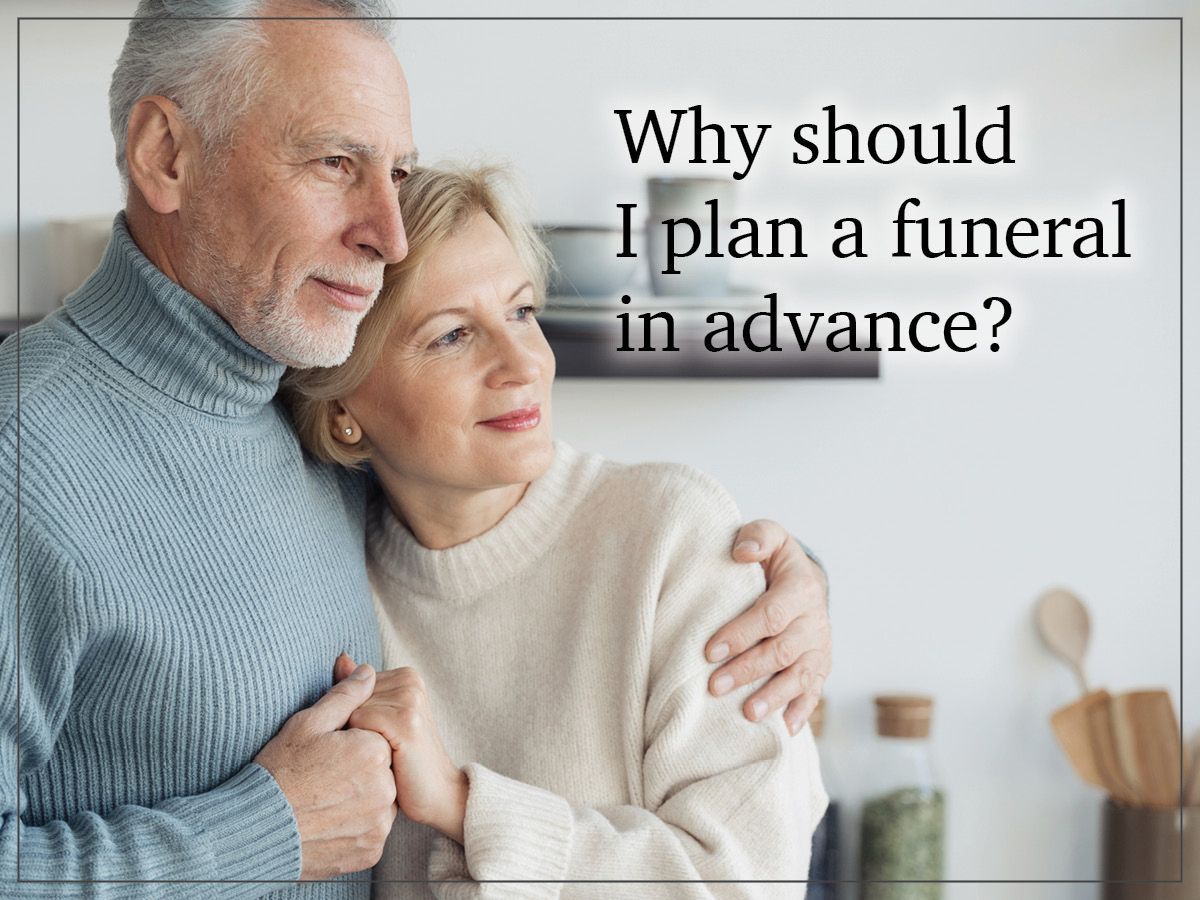
Planning a funeral in advance is a compassionate and thoughtful decision that may ease future stress for loved ones.
August 24, 2026
Renger, S. (2023). Therapists’ views on the use of questions in person-centred therapy. British Journal of Guidance & Counselling, 51(2), 238–250. https://doi.org/10.1080/03069885.2021.1900536
August 24, 2026
The Author: For more than 40 years, William G. Hoy has walked alongside the dying and bereaved. Since his retirement from Baylor University in 2024, he gives much of his time to helping colleagues connect more helpfully with bereaved individuals. He can be reached at Bill_Hoy@baylor.edu.

Show More