
September 2026: WHEN A GRANDPARENT IS NEARING DEATH: ALLOWING CHILDREN TO GUIDE THEIR OWN INVOLVEMENT

September 28, 2026

Share this article

Editor’s Note: We welcome this month the contribution of an ADEC colleague, Dr. Kathleen Massmann. Dr. Massmann serves as Clinical Director of Healing Moments Counseling in Monticello and Byron, Minnesota. You can learn more about her work at www.healingmomentscounseling.com

Death and grief are not strangers to our home, nor are they strangers to my children. In 2011, we buried our second son, and in the moments that followed his death, we made a decision that would shape not just our home, but the way we love and say goodbye. We decided to talk openly about our son, so our children knew who he was; we decided to make sure they knew what death was and what grief felt like. While others choose a different path, we found ourselves taking our young children to funerals for great aunts and uncles, allowing them to witness both the heartache and beauty that comes with death. It was a personal choice, one that each family makes for itself… and one that ultimately led to one of the most beautiful times in our life.

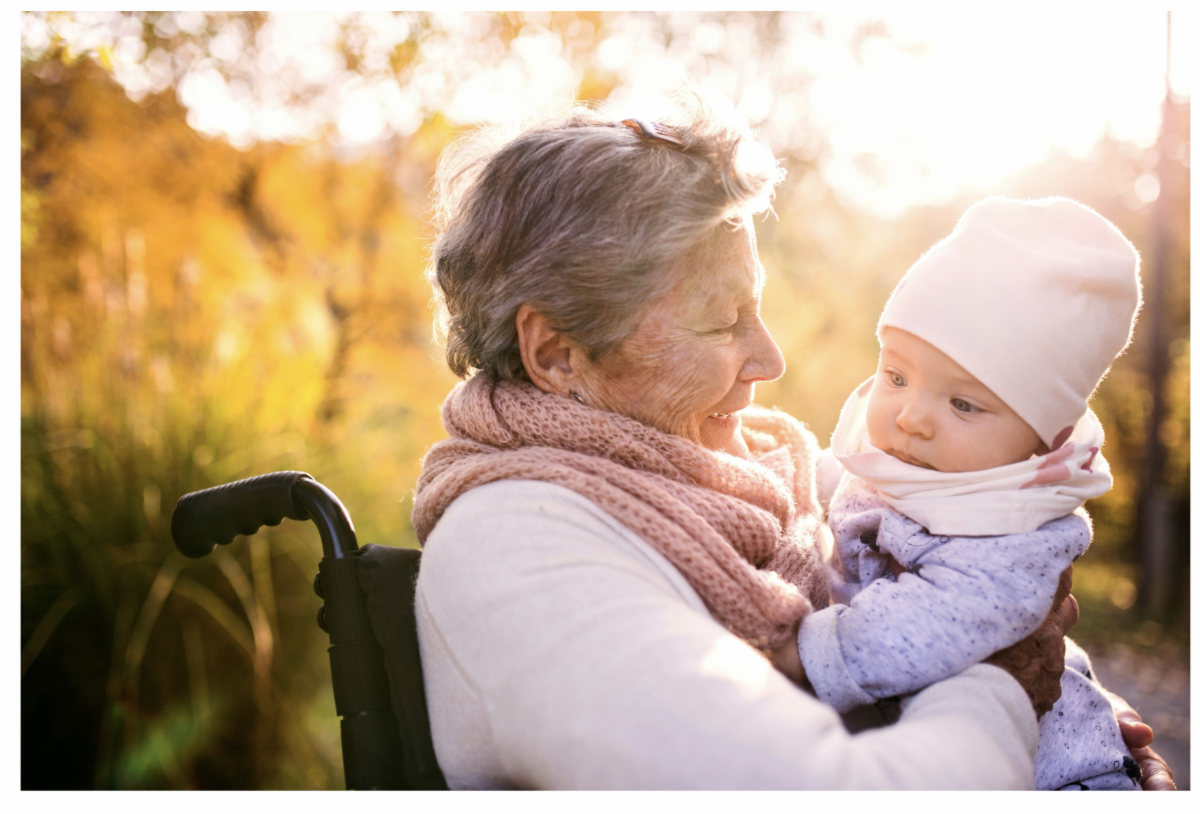
In late 2024, my mother-in-law was ending her cancer journey. As she moved into our home, our life lost its normal balance and soon found a new rhythm. Our four children, ages 8-15, spent their free time helping care for her and making memories as her functioning and ability slowly decreased. In November 2024, she entered hospice, and we began our final month together. That month brought heartache, love, and lessons that will last a lifetime. 

Embracing the caretaker role

As many families know, taking on the caretaker role in hospice is challenging, exhausting, and at times frightening. Our journey was all those things. In our house, it was also more than that; it allowed all six of us to live in a way that truly aligned with our values. It meant saying no to some of the “fun” things in life and yes to quiet nights talking and praying. It meant a 15-year-old boy quietly praying by her bedside instead of hanging out with friends. Or a game of cards set up on a hospital bed so that she could play one last hand of her favorite game. 

It also meant sleepless nights and sacrifice. As parents, it meant we had a chance not just to talk about caring for those in need, but to do it. To show our children what love and sacrifice in action meant, and that they could be part of it. As the days moved on, they did just that. They made small sacrifices throughout their day, showing up not just for their grandmother, but for us. A missed activity here and there, extra time at her bedside, an offer to help with meds or dinner—in their own way, they began to sacrifice to help care for Grandma in her last days. 

Children as caretakers

I am certain that some would disagree with the role my four children played in her final days. Those who would say they took on things that were too hard, too painful. I disagree; they took on exactly what they felt capable of and what they felt called to. No part of the journey shows this more clearly than one grandma's last days out of bed. After slowly taking herself to the restroom, she misjudged the distance to the toilet and fell on the floor. Fortunately, she did not hurt herself, but she was wedged in between the toilet and sink, and she had lost control of her bladder. 

What came next is what I will never forget: my 15-year-old son walked in and gently started to pick her up off the floor. No one asked him to; in fact, I had planned to take care of her myself, as she was in a vulnerable position. Something happened when he saw her: he didn't see the mess, he didn't recoil from her, and he didn't assume someone else would handle it. He stepped up because he knew he could help, and he knew she needed his help. That day, he chose to be her caretaker; he chose to put her needs ahead of his, and he did so in a way that radiated love and understanding. 

About a month after she entered hospice, we knew she was nearing her last days. Our days revolved around prayer, pain management, and loving each other through the hard moments and what we knew was to come. On the day she died, we knew what was ahead. All four of our children asked to stay home from school; they wanted to be there, to love her through all her moments here on earth and into the next place.

As her final moments approached, we asked the four of them if they wanted to be present at her bed. The oldest two came upstairs and quietly sat at her bedside, holding her hand, crying, and saying their final goodbyes. The younger two asked to stay downstairs. She died surrounded by her grandchildren’s love as she took her last breath and left this world for the next. In the moments that followed, my oldest two continued to cry, but in a way that told me they were where they needed to be and surrounded by what was best for them. Moments later, the youngest two came upstairs and stood by her bedside; in many ways, I believe they needed to know she was ok, that nothing horrible had happened. My youngest, who was very close to her, walked up to her, rubbed her feathery hair (as he did daily), and crawled into her bed for one last snuggle. It was how he needed to say goodbye, and he knew he had the freedom to do it.

Each goodbye is different

As a counselor, I often talk about how different each goodbye is, and how we all must grieve in our own ways. At her funeral, I saw all four of my children embody that difference. My oldest, ever practical, was a pallbearer and busied himself with the tasks to be done; my daughter was an altar server for her funeral Mass and took pride in knowing she could do this one last hard thing for Grandma. Our youngest, the quiet one, the gentle one, fell apart in the moments leading up to the casket closing; in a flash, he started yelling at everyone, “You bring her back, I want her back.” While I was comforting him, I almost missed a most poignant moment. Our 10-year-old, the funny, never-serious one stood by the casket as the funeral director began preparing to close it. And that’s when it happened.

The funeral director noticed something different in our son and quietly asked if he would like to  help “tuck Grandma in and close the casket.” I could feel my body tense for a moment: “Did he just ask my son to close his grandmother’s casket?”

But before I could do anything, say anything, my son stepped forward and said, “Yes.” So, we stood there, and we watched just how different a goodbye could be. We watched him lovingly tuck her in, close the lid, and then take the key to lock the casket. There were no tears from him, no bargaining for her to come back, and yet his goodbye was a beautiful tribute. He wanted to do one last thing for her, and he did it with a strength that only he had in that moment. He said goodbye on his terms, in his way, and with all the love he had to give.

We all say goodbye differently; for some it comes in the form of tears, for others sharing memories, and for some in the closing of a casket. We all say goodbye differently, and my children chose their goodbyes. And in that choice, I saw something I will never forget; love, courage, and the freedom to grieve in their own way.

Copyright © 2026 by Kathleen Massmann, PhD. All rights reserved. This article printed under a license for GriefPerspectives through GriefConnect, Inc.

Recent Posts

By Erin Patrick • November 12, 2026
FACING LIMITATIONS, REFOCUSING PRIORITIES: THE CHALLENGES AND OPPORTUNITIES OF AGING
By William G. Hoy • November 12, 2026
Check assumptions at the door.
November 10, 2026
Want to receive Grief Perspectives in your email box every month—absolutely free! Simply send an email to Daliah@SnyderFuneralHome.com and write SUBSCRIBE TO GRIEF PERSPECTIVES in the subject line. If our newsletter no longer meets your needs, you can also unsubscribe by sending an email. And either way, we invite you to forward this issue to colleagues and friends you think would benefit from having their own subscription. WHEN A GRANDPARENT IS NEARING DEATH: ALLOWING CHILDREN TO GUIDE THEIR OWN INVOLVEMENT Kathleen Massmann, PhD, LPCC, FT Editor’s Note : We welcome this month the contribution of an ADEC colleague, Dr. Kathleen Massmann. Dr. Massmann serves as Clinical Director of Healing Moments Counseling in Monticello and Byron, Minnesota. You can learn more about her work at www.healingmomentscounseling.com
November 6, 2026
Families in Lititz often ask whether choosing cremation impacts their ability to hold a meaningful service.

October 2, 2026
Families in Lititz often ask what veterans’ funeral benefits include when planning a meaningful tribute for a loved one who served.

September 4, 2026
Planning a funeral in advance is a compassionate and thoughtful decision that may ease future stress for loved ones.
August 24, 2026
Renger, S. (2023). Therapists’ views on the use of questions in person-centred therapy. British Journal of Guidance & Counselling, 51(2), 238–250. https://doi.org/10.1080/03069885.2021.1900536
August 24, 2026
The Author: For more than 40 years, William G. Hoy has walked alongside the dying and bereaved. Since his retirement from Baylor University in 2024, he gives much of his time to helping colleagues connect more helpfully with bereaved individuals. He can be reached at Bill_Hoy@baylor.edu.

August 7, 2026
Families in Lititz, Pennsylvania, often ask whether cremation or burial is the better choice when planning a meaningful farewell.

Show More