GriefPerspectives

Author

Kathleen Massmann, PhD, LPCC, FT

Date

October 9, 2026

Share

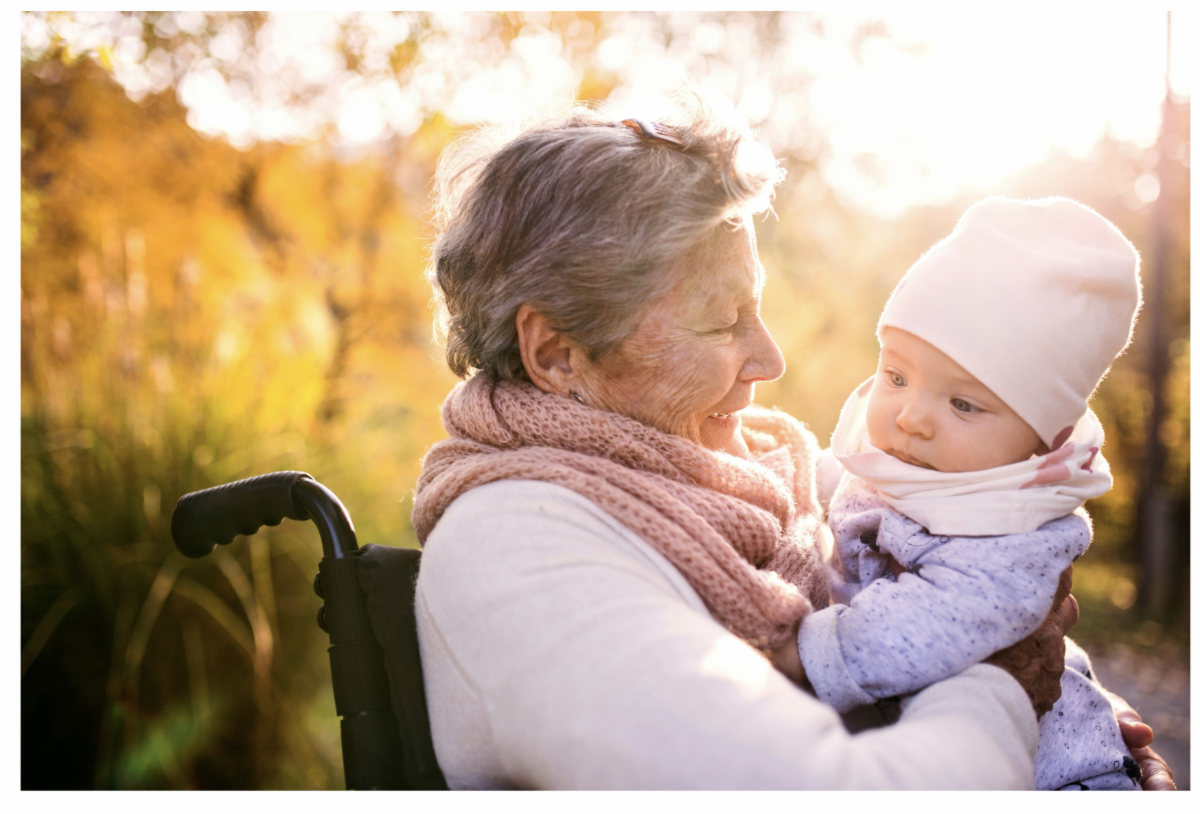
“Getting old is not for sissies!” My father-in-law must have found the inscription in a roadside stand on some trip, bringing it home to display on his mantle. He meant nothing pejorative by it, simply pointing out, especially to the younger family members who entered his den, that aging requires a measure of courage, at least to do it well. The physical, psychological, and social challenges of getting older can be significant.


Now that I am offered senior discounts without asking, I realize that I belong to the “gray club,” as well. Like many people my age, I realize with increasing frequency that I lack the energy and stamina to do the things I did 25 years ago. Spending a day with our energetic grandkids is exhausting, even though I had little trouble keeping up with their mother three decades ago when she was that age. The enumerable conversations I enter into with my contemporaries regarding doctors, clinic visits, and medical procedures makes me aware that I am not alone.


Despite the strides that have been made against ageist stereotypes in the media, an opposite trend is also possible. I have long noted that one can search the pages of the publications of the American Association for Retired Persons (AARP), for example, and not likely find a frail older person anywhere in sight. Rather, the stories and ads nearly always picture older adults in the vigor of life, playing tennis, traveling the world, and enjoying the finer things in life. In fact, even the individuals pictured in the ads for walk-in bathtubs and other assistive devices often look like they stepped right off the bike trail or the running track right before the ad photo shoot! Anyone who works regularly with aging adults knows that these images are not typical of large swaths of the population we serve.


Good care of aging individuals means always acknowledging the potential challenges of aging while also pointing out some of the amazing opportunities. Here are a few ideas for younger professionals and volunteers who need to better understand those of us who are living in the last quarter (or less) of life.

Check assumptions at the door.

Not everyone ages alike so inquire about what the challenges and opportunities are that are viewed by this older individual. An older adult might have retired early with the hopes of travel, only to be sidelined by a health crisis. This person might face significant financial challenges because the cost of housing has accelerated more quickly than retirement benefits. I think it is vital to investigate the contours of aging for this person in front of me right now.


In other words, asking questions provides a far better understanding of the contours of aging for this individual than assuming one knows what aging is like.


  • How does your health now compare to what you expected a few years ago?
  • What are some dreams you have for the future; what would you like to see or do in your life?
  • How would you describe your biggest disappointments in recent years/since you retired/since you turned 60?
  • What are the things they never told you about getting older you wish you would have known?
  • What parts of retired life are better than you expected? What parts are worse?


Help aging adults renew their sense of purpose—or find a different purpose.

If one’s purpose in life is closely tied to one’s vocational pursuits, the loss of that professional identity in retirement can be devastating. In my mid-20s, I formulated a statement of life purpose. While it has morphed slightly over the decades, it still is largely representative of what it was 40-plus years ago because then, like now, I had become convinced in some seminar or from some now-unremembered mentor to make sure my life purpose was bigger than my job.


The way I state my life purpose is this: “I want to know and love God so intimately that I become His instrument in transforming the world by being a faithful steward of the resources and relationships entrusted to me.” This personal mission statement is fairly close to the way I first wrote it in 1987; I know because it is in my 1987 journal.


My statement of life purpose will not “work” for everyone who reads this article, and that is fine. Do not let your differences with the specific focus of my purpose statement lead you to think the exercise of thinking about your life purpose (or personal mission statement) is not worthwhile. This statement of purpose, however, has allowed me to transition careers four major times (from congregational pastor to hospice bereavement counselor to college professor to semi-retiree) and it still works for all of them.


Older adults may have thought little about purpose in this chapter of life. Steven Covey, Roger Merrill, and Rebecca Merrill (1994) articulated the road to developing purpose by considering four perspectives: How do I want to live, love, learn, and leave a legacy? As we age, it becomes increasingly important to contemplate the “love” and “legacy” components of this framework, especially as we lose some of our physical and even cognitive abilities. Life purpose needs to include at least as much emphasis on “being” as it does on “doing.”

Compassionately investigate the losses that might not get easily acknowledged.

Obviously, older adults who become widowed or have an adult child die get on the caregiving community’s radar right away. We notice these people, we acknowledge them in our faith communities, and we can participate in well-established rituals to join with them in their mourning. But for those who face the gradual loss of mobility or stamina, for those who are gradually losing their ability to live on their own without assistance from family or paid caregivers, and those whose “golden years” do not closely mirror the imaginations of their middle-aged years all face losses that are often not acknowledged. And there are no ceremonies that help us mourn the surrendering of a driver license or the loss of mobility.


That is why some of the questions in the above section: “How does your health compare…” or “What have been big disappointments…?” can prove so valuable. Ask them often—even of people who do not seem to have lost anything. You might be surprised at the number of invisible disabilities and losses with which older adults are living.


 Celebrate the opportunities large blocks of time could represent. We have all heard the individual in her second year of retirement intone, “I have so much going on, I really don’t know how I ever had time to work.” I challenge new retirees in my friendship circle to carefully contemplate how to invest their newfound freedom in meaningful pursuits, lest we simply fill the schedule with things that do not matter. My wife encouraged me to say yes to no new opportunities during my first year as a retired professor and the discipline was helpful, so I encourage new retirees to be careful of what they commit to in the early months.


 I find that now that I do not mentor students or prepare and teach classes at the university, I have far more time for reading, for meaningful interaction with our grandchildren and their parents, and for preparing each week for the small group Bible study I lead. If not careful, however, I could fill my days with watching television or mindlessly surfing the internet; I have, unfortunately, met quite a few seniors who did spend their retirement in such pursuits.


 Goal setting on a quarterly and annual basis, as well as regular review of my progress on those priorities, is far more important today than when I was working full-time. If I am not intentional with the use of my resources—be they financial resources or minutes in the day—I will squander the time and financial assets at my disposal and not use either one for the benefit of those around me.


 Journaling is one of those habits that help me reflect on what I am learning and how I am growing. Since I have journals dating back to 1984, I can see the progress (and the lack of progress) over a long period. Keeping a reading list and log is also necessary for me so that I do not delude myself into thinking I am reading more than I really am. This is especially important as we age because it helps maintain our cognitive acuity and helps us stay up to date on the current thinking in our field and in other fields, as well. I cannot easily mentor younger colleagues in this work if I am not keeping up with the latest thinking in end-of-life and bereavement care.

Encourage connections with strong social support.

While readers of this newsletter undoubtedly embrace the positive role of social support, ongoing evidence indicates the empirical value of such support. For example, one recent study showed that while traumatic brain injury with even brief loss of consciousness is correlated with such cognitive declines as early onset dementia, positive social support appears to mediate this effect. In other words, strong social support seems to reduce the likelihood of ongoing cognitive decline (Bedard & Taler, 2021). While such findings cannot be generalized to all medical issues in aging, it stands to reason that strong social support affects one’s attitude and, consequently, one’s quality of life through perception of well-being.


Aging well does not mean ignoring the inevitable changes that go with it. Rather, aging well means honestly acknowledging the challenges while exploring the opportunities to remain (or become) a vital contributor to the well-being of the next generation. Is it not true that we would all deeply love to leave the world just a little better than we found it?

References

Bedard, M., & Taler, V. (2021). Social support buffers against cognitive decline in single mild Traumatic Brain Injury with loss of consciousness: Results from the Canadian longitudinal study on aging. The Journals of Gerontology: Psychological Sciences, 76(9), 1777–1787. https://doi.org/10.1093/geronb/gbaa213


Covey, S.R., Merrill, A.R. & Merrill R.R. (1994). First things first. Simon & Schuster.


The Author: For the last 40 years, William G. Hoy has been walking alongside the bereaved, supporting the dying and their families, and teaching colleagues how to provide more effective care. After a career in congregation, hospice, and education, he now dedicates his time in semi-retirement to helping colleagues in health care provide the best possible care to the dying and bereaved. He retired as Clinical Professor of Medical Humanities at Baylor University in May 2024, but can still be reached via his university email at Bill_Hoy@baylor.edu. 


BRIDGING RESEARCH AND PRACTICE

Bodner, E., Shrira, A., & Palgi, Y. (2023). Attitudes to aging mediate the reciprocal effects of health anxiety and physical functioning. Psychology & Health, 38(2), 190–208. https://doi.org/10.1080/08870446.2021.1956496

Knowing from both research and clinical experience that attitudes about aging have an impact on perceived well-being in older age, the current study sought to understand the reciprocal effects of health anxiety and physical functioning. They sought to learn from their accumulated data answers to the following questions: (1) can health anxieties predict change in physical functioning? (2) can physical functioning predict change in health anxieties? (3) What is the role of attitudes to aging in mediating these reciprocal relationships? The random sample from 2,300 telephone calls made to residences in Israel, 777 of whom indicated they met the selection criteria (over the age of 65 with at least one underlying medical condition). Of the 456 interviewees who completed the first interview, 226 completed a second interview six months later, providing the data for this study.


The median age of respondents was 73.59 and approximately 2/3 of respondents were female. More than half of the respondents live with more than one medical condition including hypertension, diabetes, heart disease, arthritis, and/or hearing loss. About 1/5 of respondents were Israeli Arabs and the overall sample was well-educated and above average in economic status. Researchers utilized several standardized instruments to ascertain levels of health anxiety, physical functioning, and attitudes about aging; there were 36 items among the three instruments used.


What the researchers concluded was that “the effect of health anxiety on physical functioning is not direct but is indirect through negative attitudes to aging. This trajectory might be driven by such negative attitudes, so that when health anxiety increases, an individual who holds negative attitudes may attribute his/her chronic medical problems to losses which come with old age, and consequently

deteriorates in his/her level of physical functioning. In this case, attitudes to aging as a time of psychosocial loss may add a broader negative meaning to the health anxiety in older adults with chronic medical problems, and result in deteriorated physical functioning” (pp. 201-202).


Those supporting older adults might want to utilize these research findings when interviewing older adults. For example, the clinician could say, “Some research seems to link our attitudes about aging to how we perceive pain and other symptoms? How do you think that is or is not true for you? In supporting individuals who are facing grief and burdensome health concerns, the primary reason for reading research is to help us provide greater understanding into patient experience and to help us serve patients more effectively. 

BOOKSHELF

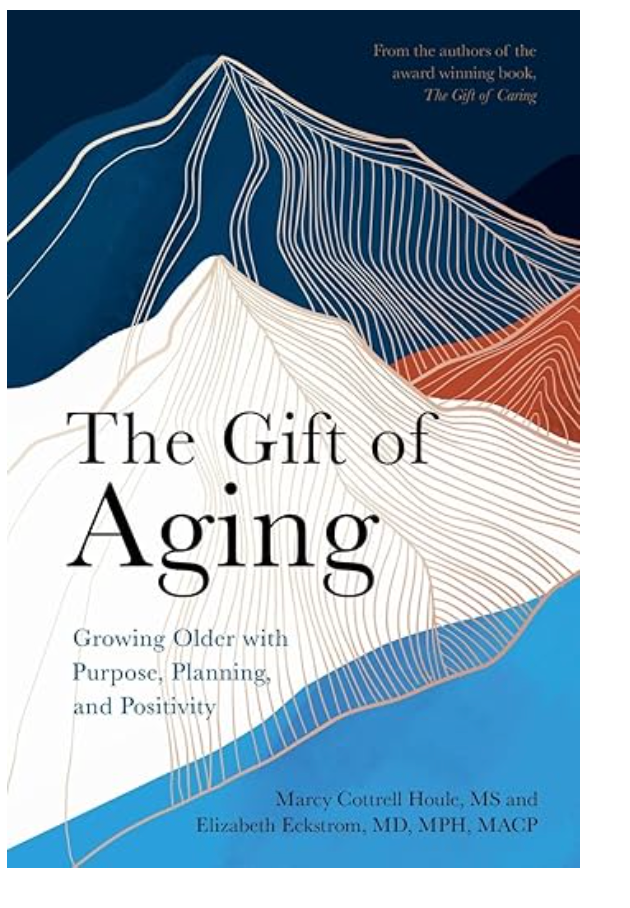
Cottrell Houle, M., & Eckstrom, E. (2023). The gift of aging growing older with purpose, planning and positivity. Cambridge University Press.


Reviewed by Molly A. Keating, MA, CT

Editor, GriefPerspectives

A unique and timely book for the Baby Boomer generation, all of whom will be 65 years old by 2030, The Gift of Aging is a thoughtful and thoroughly considered guide on how to age well. Marcy Couttrell Houle, MS and Elizabeth Eckstrom, MD, MPH, MACP originally wrote The Gift of Caring: Saving Our Parents from the Perils of Modern Healthcare in 2015. They teamed back up to share from their experiences, interviews, and research on how we can age well intentionally with hope, enthusiasm, and purpose.


Outlined in four sections are chapters overviewing the aging complexities for the mind, body, family, and soul. Each chapter strattles honest practicality blended with the warmth of human wisdom and reality. Some chapters end with reflective questions to consider, and some with profound quotes from senior citizens on how they see aging. Pulling from interviews with senior adults and their own parents, Couttrell Houle and Eckstrom let senior voices lead the way. The comfort and beauty of what the senior community has to offer when talking about aging gives the reader a way to look forward to this inevitable process rather than dread it.


The Gift of Aging is a book well placed in the hands of anyone thinking long-term or wondering what is ahead. It’s also an extremely helpful companion guide for anyone caretaking their elderly parents and wanting to understand more about what is going on for them. The genuine optimism, guidance, and wisdom within its pages makes it a compelling read for anyone that is fortunate enough to be aging. 

Local News

By Erin Patrick • November 12, 2026
FACING LIMITATIONS, REFOCUSING PRIORITIES: THE CHALLENGES AND OPPORTUNITIES OF AGING
November 10, 2026
Want to receive Grief Perspectives in your email box every month—absolutely free! Simply send an email to Daliah@SnyderFuneralHome.com and write SUBSCRIBE TO GRIEF PERSPECTIVES in the subject line. If our newsletter no longer meets your needs, you can also unsubscribe by sending an email. And either way, we invite you to forward this issue to colleagues and friends you think would benefit from having their own subscription. WHEN A GRANDPARENT IS NEARING DEATH: ALLOWING CHILDREN TO GUIDE THEIR OWN INVOLVEMENT Kathleen Massmann, PhD, LPCC, FT Editor’s Note : We welcome this month the contribution of an ADEC colleague, Dr. Kathleen Massmann. Dr. Massmann serves as Clinical Director of Healing Moments Counseling in Monticello and Byron, Minnesota. You can learn more about her work at www.healingmomentscounseling.com
November 6, 2026
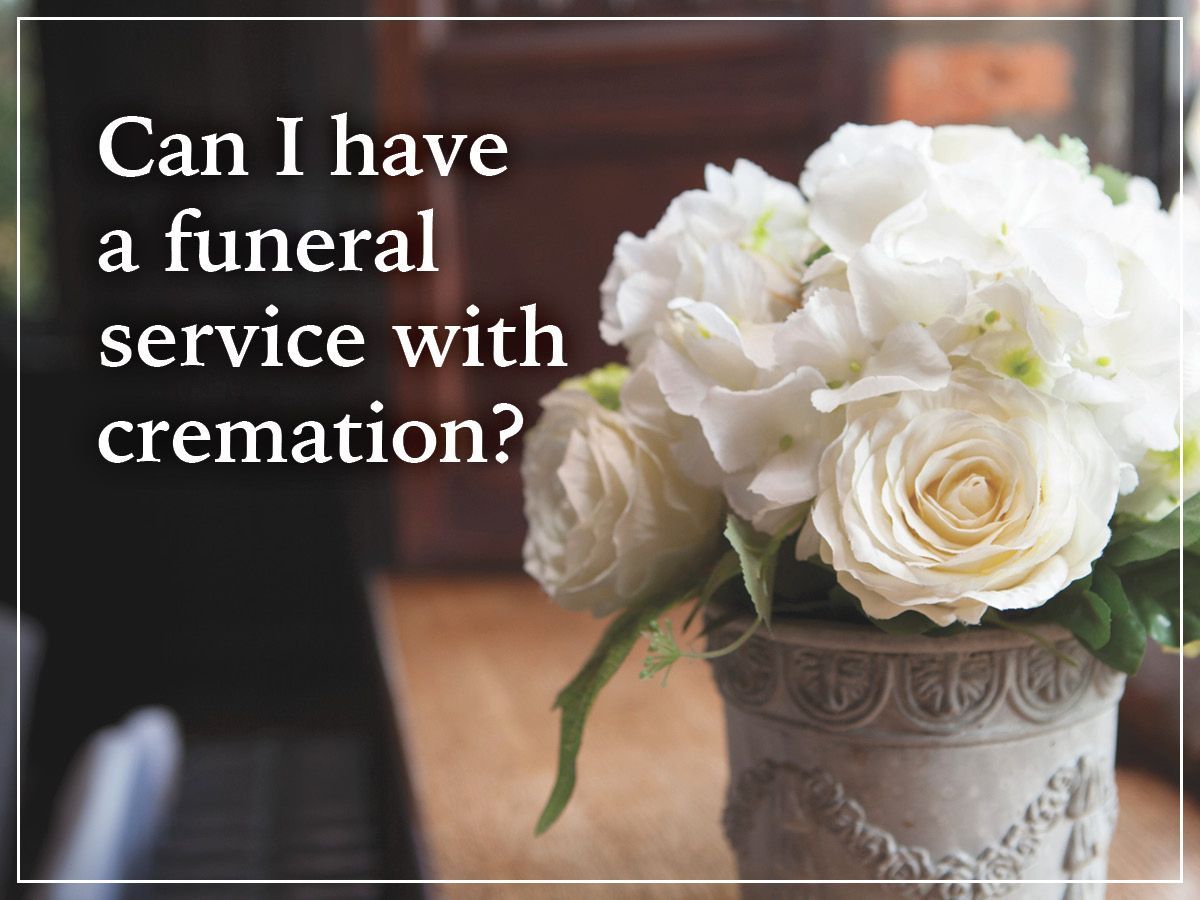
Families in Lititz often ask whether choosing cremation impacts their ability to hold a meaningful service.
October 2, 2026
Families in Lititz often ask what veterans’ funeral benefits include when planning a meaningful tribute for a loved one who served.
September 28, 2026
Editor’s Note: We welcome this month the contribution of an ADEC colleague, Dr. Kathleen Massmann. Dr. Massmann serves as Clinical Director of Healing Moments Counseling in Monticello and Byron, Minnesota. You can learn more about her work at www.healingmomentscounseling.com
September 4, 2026
Planning a funeral in advance is a compassionate and thoughtful decision that may ease future stress for loved ones.
August 24, 2026
Renger, S. (2023). Therapists’ views on the use of questions in person-centred therapy. British Journal of Guidance & Counselling, 51(2), 238–250. https://doi.org/10.1080/03069885.2021.1900536
August 24, 2026
The Author: For more than 40 years, William G. Hoy has walked alongside the dying and bereaved. Since his retirement from Baylor University in 2024, he gives much of his time to helping colleagues connect more helpfully with bereaved individuals. He can be reached at Bill_Hoy@baylor.edu.
August 7, 2026
Families in Lititz, Pennsylvania, often ask whether cremation or burial is the better choice when planning a meaningful farewell.
Show More